
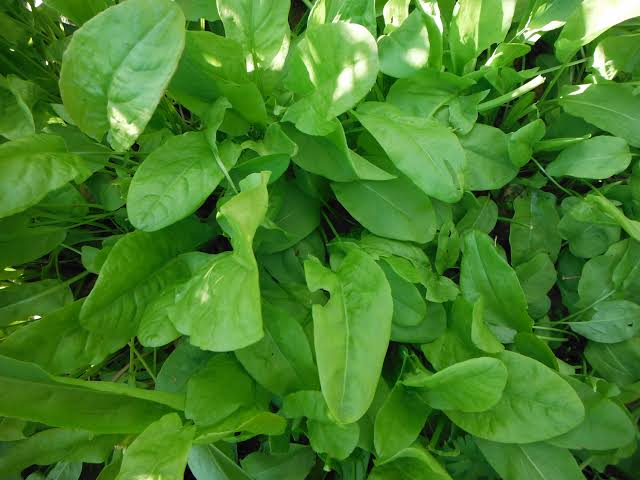
I’m afraid I offer only scant apologies for banging on about homegrown Sorrel once again. (see http://keithreeves.co.uk/kitchen-tales/sorrel-soup/) I have come to understand what a remarkable ingredient it is – somewhere between a flavouring and a vegetable, on occasions even a condiment. And although I find it delicious, exhilarating and adaptable as an ingredient, it is far from alone in serving as the manifestation of a radically changed gastronomic outlook across the UK. The scamper for culinary modernism can sometimes overlook invaluable tradition. So it came as no surprise to find a countrywide deficiency of robust recipes to enhance its wonderful lemon-slicked profile – an oversight, if I may say so Delia.
The Sorrel I cultivate nestles in a simple vegetable patch in an otherwise everyday Norfolk garden. But cultivate is too grandiose a title for this perennial foliar, and on account of its flourishing growth rate, it has, under duress, been restricted to two large pots – the horticultural equivalent of tagging I fear. Its enforced constraint is because Sorrel, like Horseradish, Mint, or my award winning Ground Elder, when left unrestricted, seek their own fiefdom across any landscape deemed accessible. Nevertheless, native edible ingredients that lobby for their own postcode, must surely be nurtured.
“I learnt the advantages of sorrel in France…where every garden, however small, has a a patch of it as close to the kitchen door as possible.” – Jane Grigson from her Vegetable Book (1978)
And that is very much the crux of this post. Sorrel is a most undemanding, egalitarian crop, and grows as luxuriantly in a temperate East Anglian garden as it does in any sybaritic rural smallholding in Provence, Piraeus or Piedmont. Like so many of our unsung ingredients, Brexit-resilient it has remained, although it is only marginally easier to find today than it is to unearth suitable recipes in British cookbooks.
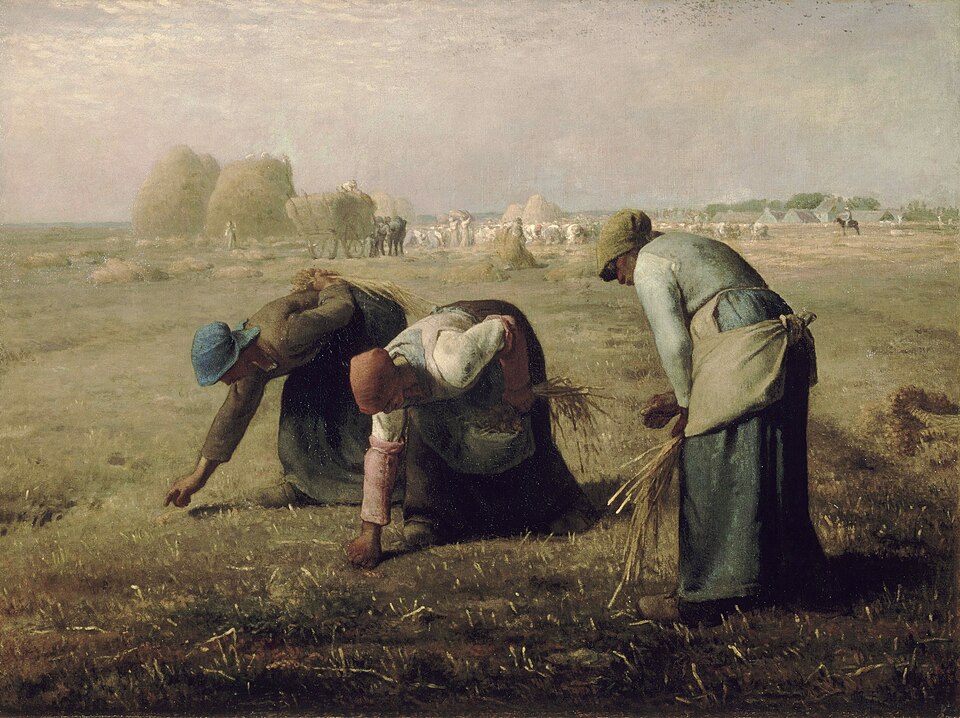
Sorrel (Rumex scutatus) is one of a myriad of household ingredients that carry the illusory veil of a former rustic simplicity, a revered culinary link to a time which heralded the beginning of the industrial revolution in the 18th century and saw Britain hasten the establishment of an urban rather than a pastural economy. Decades ahead of industrialisation elsewhere (Europe and the USA took almost another century to urbanise its workforce) we were the first country to effectively uncouple many valuable aspects of the countryside and its farming traditions in favour of a metropolitan landscape for the bulk of our then national manpower.
Eric Hobsbawm, in his social history of the Great Agricultural Uprising of 1830 wrote “England presented a unique and amazing spectacle to the inquiring foreigner: it had no peasants”
Cookery traditions of our British countryside have, in addition, been belittled by our dalliance and desperation for gastronomic pastures ‘on the other side of the fence’ (or channel perhaps). It is there, where the ‘grass’, alongside many ingredients, ‘is always greener’.
Inexpensive peasant cooking, the fashionable beacon of rustic simplicity that we globetrotters venerate when defined by the cuisines of France, Italy, Greece or Spain, are here, in the UK, all too often dismissed and abandoned.
Having been commissioned to write a cook book, predominately focused on the gastronomy of East Anglia, I have temporarily left the continued devotion of Elizabeth David, Ottolenghi and River Café cookbooks to others so that I might fly the flag for English, indeed East Anglian, recipes. With some urgent address needed to our destructive food system and our increasing reliance on importation – but two of the undesirable side effects of our chemically enhanced monocultures – this is not so much a manifesto, more a realignment of perspective.
The proposition is to find food, either via specific recipes or as raw ingredients, that can define an expression of locality rather than the aftermath of jet lag. Recipes written by the seasons and a sense of place, a natural resilience without recourse to litres of aviation fuel. As necessary realignments go, an ingredient such as Sorrel is one of its natural ambassadors
Below a selection of oft cooked recipes. Two very handy Sorrel sauces and one of a fine tart.
The sauces are thanks to Sybil Kapoor from her book Simply Veg (2016). Both can be used with salads, fish or charcuterie – the first is a must for roast pork. Before discovering these I followed a range of green sauces from Salsa verde to Chimchurri. For a brief while I was entranced by a Californian Green Goddess dressing from In the Green Kitchen (2010) by Alice Waters (of Chez Panisse), but after realising that I would often spend half a day at the behest of Waitrose supermarkets – alongside a substantial hit to the credit card, to obtain all the ingredients – I finally looked elsewhere.
Apple and Sorrel sauce.
Ingredients
225 g dessert apples such as Braeburn
150ml cider vinegar
55 g granulated sugar
115 g sorrel leaves, washed
30 g unsalted butter
Peel, core and roughly dice the apples. Place in a non-corrosive saucepan with the vinegar and sugar. Simmer gently until very soft. Add sorrel and cook for 5 minutes, then purée and beat in the butter. Serve warm or cold.
Sorrel sauce
And a sauce so arresting, whose origins were born of the 17th century, and whose modest ingredient list belie its flavour.
1 bunch of spring onions, trimmed
285 ml double cream
A large bunch of sorrel
Sea salt and freshly ground white pepper
Finely slice the spring onions and place in a small non-corrosive saucepan with the cream. Set over a low heat and slowly bring to the boil, then reduce the heat and simmer for 5 minutes.
Wash the sorrel discarding any tough stems. Finely slice the leaves and mix two-thirds of the shredded sorrel into the simmering cream. As soon as the sorrel wilts, remove it from the heat and liquidize. Immediately add the remaining sorrel, and process once again. Return to the pan and season to taste. Once ready to serve, reheat over a medium heat and serve immediately.
Cheddar and Sorrel Tart adapted from French Farmhouse Cook Book (1996) by Susan Herrmann Loomis
Ingredients
One 26 cm blind baked shortcrust tart shell
270 g sorrel, rinsed and trimmed of stems
185 ml milk
60 ml double cream
2 large eggs
2 large egg yolks
120 g grated Cheddar
Preheat the oven to 200 c
Place the rinsed sorrel with water still clinging to it, in a medium sized heavy pan over medium heat
Cook, covered until the sorrel ‘melts’, about 5 minutes. Stir it occasionally until it gives up its liquid and turns to a thick purée. Remove the pan from the heat and set aside.
In a medium sized bowl, whisk together the milk and the cream. Add the whole eggs, one at a time until blended then whisk in the egg yolks. Season to taste.
Place the pre-baked pastry shell, still in its pan, on a baking sheet, Spread the sorrel paste gently into the pastry shell. Top it with the grated cheese. Carefully pour over the egg mixture,
Place the baking sheet in the oven and bake until puffed and golden, around 25 – 30 minutes.
Remove from the sides of the pan, serve hot or at room temperature.